Phenophase · fruiting October 2026
Rose hips, crabapples and the birds that work them in order
A fruit transect at Oak Creek on 9 October found 340 rose hips at 31 per cent of the original crop and 96 crabapples at 74 per cent, and the birds working the two were different species in a fixed order.
| Date | Place | Oak Creek, McDonald-Dunn Research Forest, Oregon | Weather | 13°C · clear after morning fog · Wind E 2 m/s |
|---|
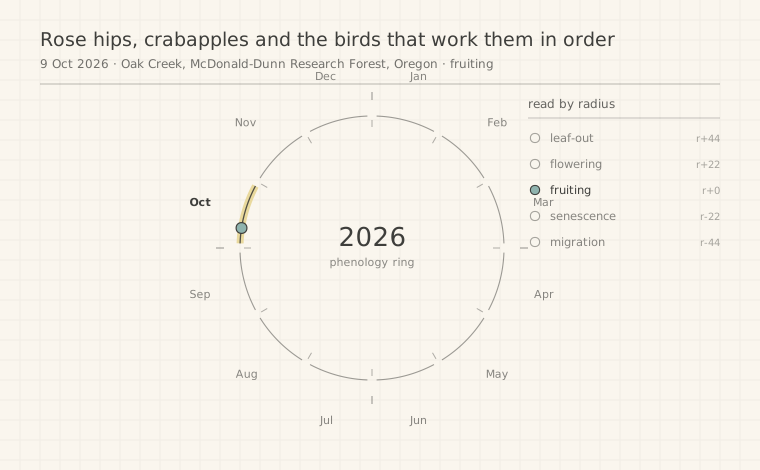
Fruit is easier to count than birds because it holds still, and counting both at once tells you which bird is doing the eating. I counted the same forty rose canes and three crabapples on 12 September and again on 9 October.
What is left on the bushes
- Nootka rose: 1,100 hips on 12 September, 340 on 9 October — a 69 per cent loss in four weeks.
- Pacific crabapple: 370 fruit on 12 September, 96 on 9 October — a 74 per cent loss.
- Himalayan blackberry, for comparison: 2,400 berries counted in the same belt in September, and 60 left today. Blackberry goes first and goes fastest.
The rose hips that remain are the small ones and the ones high on the cane. The blackberries left are dry and shrivelled, which is what a blackberry looks like after the birds have passed it over.
Who eats what, and when
- Robins, 22 today, all in the crabapples. In September the same species was on the blackberry, and it has moved across as the blackberry finished.
- Song sparrows, 6, on the rose hips at ground level, taking them whole and dropping the skin.
- White-crowned sparrows, 4, with the song sparrows — the first I have seen here this autumn. They arrive from the north and spend the winter in low cover like this.
The order is not random. Soft fruit with high sugar goes first and is taken by the largest birds; hips are dry, seedy and low in sugar, and they last until the small sparrows need them in November. That sequence is the reason a hedge with three or four fruit species feeds more birds through the winter than a hedge with one.
What to check next time
- Recount the hips on 23 October. The curve matters more than the total.
- Look for varied thrushes in the crabapples, which is where I expect the next change to happen.
- Check the dropped rose hip skins for seed. If the sparrows are crushing the seed, the hips are a food source; if the seed passes through, they are transport.
Observed
| Scientific name | Vernacular | Count | Note |
|---|---|---|---|
| Rosa nutkana | Nootka rose | 340 | 340 hips left on 40 canes, about 31 per cent of the crop counted on 12 September |
| Malus fusca | Pacific crabapple | 96 | 96 fruit on three tagged trees, 74 per cent of the September count |
| Turdus migratorius | American robin | 22 | 22, all in the crabapples, none on the hips |
| Melospiza melodia | song sparrow | 6 | six, working the rose hips at ground level |
| Zonotrichia leucophrys | white-crowned sparrow | 4 | four, with the song sparrows, first of the autumn here |
Reflection
Everyone writes that birds eat fruit in autumn. Writing down which bird eats which fruit, and in what order, takes an hour of standing still and gives you something a sentence cannot.
Kit carried
- hand counter
- 50 m tape
- flagging tape
- 10x hand lens
- Rite in the Rain notebook
- 2H pencil
- pruning shears